

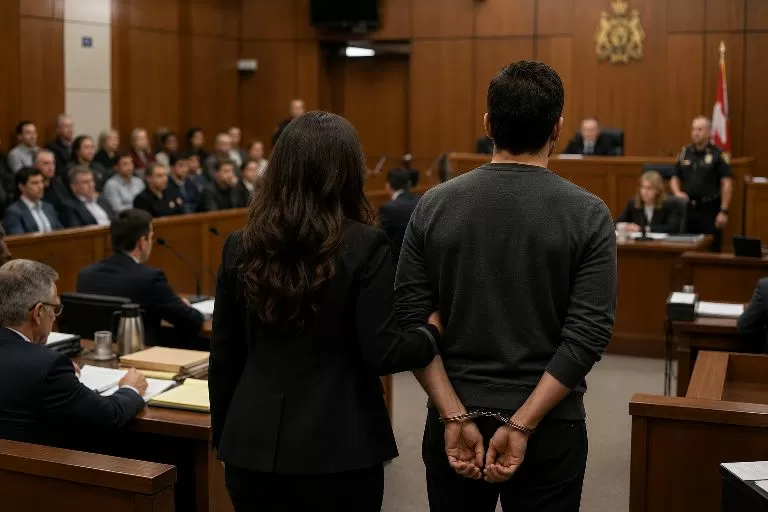
It’s Sunday morning and the paperwork from Saturday night is sitting on the kitchen table. There’s a release document with a list of conditions on it, a court date at the Ontario Court of Justice on Armoury Street about five weeks away, and a phone with a dozen messages from family asking what happened. Most people in that position do the same thing, which is put the papers in a drawer and tell themselves they’ll deal with it closer to the court date.
That’s understandable and it’s usually a mistake. The conditions on that release apply from the moment you sign it, the police may still want to talk to you, and decisions made in the first few days, often without realising they’re decisions at all, can shape how the case goes months later.
Booking a free consultation with a Toronto criminal defence lawyer is the simplest way to find out where you actually stand before any of that hardens, and it costs nothing except half an hour of your time.
What a free consultation actually is
At Legal Solutions Law Firm, the first consultation is free and runs about 30 minutes. It’s confidential, and what you tell the lawyer is protected by solicitor-client privilege whether or not you end up hiring them. Plenty of people don’t realise that and hold back the details that matter most, which makes the meeting far less useful.
Be realistic about what you’ll get out of it. The lawyer won’t have the Crown’s disclosure yet, meaning the police notes, statements and any video, so nobody can tell you in that first conversation exactly how strong the case is. What you should leave with is a plain explanation of the charge, what happens at the first appearance, what your release conditions mean in practice, the range of possible outcomes, and what it would cost to have the firm handle it.
What to bring
The more paper you can put in front of the lawyer, the more specific the advice gets.
- Your release paperwork and any list of conditions.
- The court date and courthouse address.
- Any ticket, summons or property receipt from police.
- Your own notes on what happened, written for the lawyer only.
- Names and numbers of anyone who saw what happened.
- Details of any previous charges or convictions.
Write your notes as soon as you can and keep them to yourself. Memory fades quickly after an arrest, and the sequence of events, who said what, and what time you were told you could call a lawyer can all become important once disclosure arrives.
Questions worth asking
A consultation runs both ways. You’re finding out about your case, and you’re also deciding whether this is the person you want handling it.
- Who will actually be working on my file, day to day?
- Is the fee flat or hourly, and what does it include?
- Do I need to attend the first court date in person?
- What do my release conditions allow and forbid?
- What are the realistic outcomes for a charge like mine?
- How do I reach you if something comes up after hours?
The fee question matters more than people like to admit. Legal Solutions offers flat fees with payment plans and no hourly billing, which means you know the cost up front and aren’t watching the clock every time you call with a question.
What not to do before you’ve spoken to a lawyer
Most of the damage people do to their own cases happens in the gap between the arrest and the first proper legal advice, and it’s almost always avoidable.
Don’t give the police a statement about the allegation. You can give your name and basic identifying information, but anything beyond that should wait until you’ve had advice. Don’t contact the complainant or anyone named in your conditions, even to apologise or clear things up, because a single text can turn into a second charge for breaching your release. And don’t post about the arrest on social media. Screenshots last a long time and Crown prosecutors do look.
If your conditions feel unworkable, say they stop you living at home or seeing your children, don’t quietly ignore them. They can sometimes be varied with the Crown’s consent or by a court, and that’s exactly the kind of thing to raise during the consultation.
If someone is being held for a bail hearing
Sometimes the call comes from a family member, because the person charged hasn’t been released at all and is waiting to be brought before a justice of the peace. In that situation the timing is tighter. Having a lawyer there for the first bail hearing usually matters a great deal, since losing it can mean weeks in custody and a bail review is a more involved, more expensive process than getting the first hearing right.
Legal Solutions takes calls 24 hours a day, seven days a week, including emergency bail matters, so a relative can call on someone’s behalf at two in the morning and still reach the firm.
About Legal Solutions Law Firm
The firm was founded by Ryan Manilla, who was called to the Ontario Bar in 2008, and has been serving the Greater Toronto Area since 2012. Its head office is in Scarborough, with appointment-only offices on University Avenue and Yonge Street in Toronto, as well as North York, Brampton and Thornhill. Its criminal practice covers impaired driving, assault and domestic assault, theft and fraud, drug and weapons charges, bail hearings and breaches of bail.
If you’re holding paperwork like the bundle on that kitchen table, a free half-hour now is likely to save you a good deal of worry later, and it may well change what happens at that first court date.
This article is general information and isn’t legal advice for any particular case.